


We came for a late lunch and left at dusk, which was not the plan.
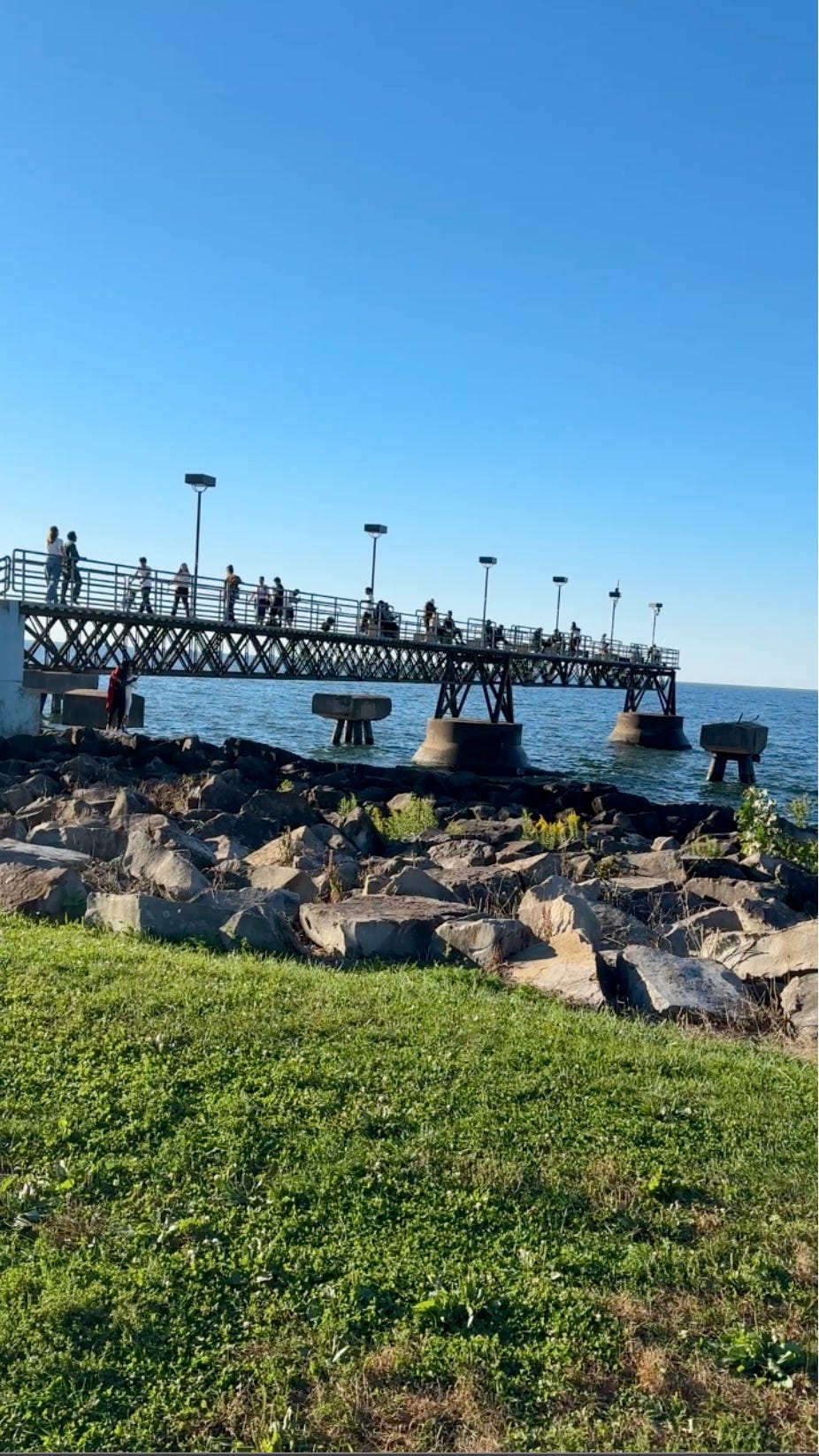
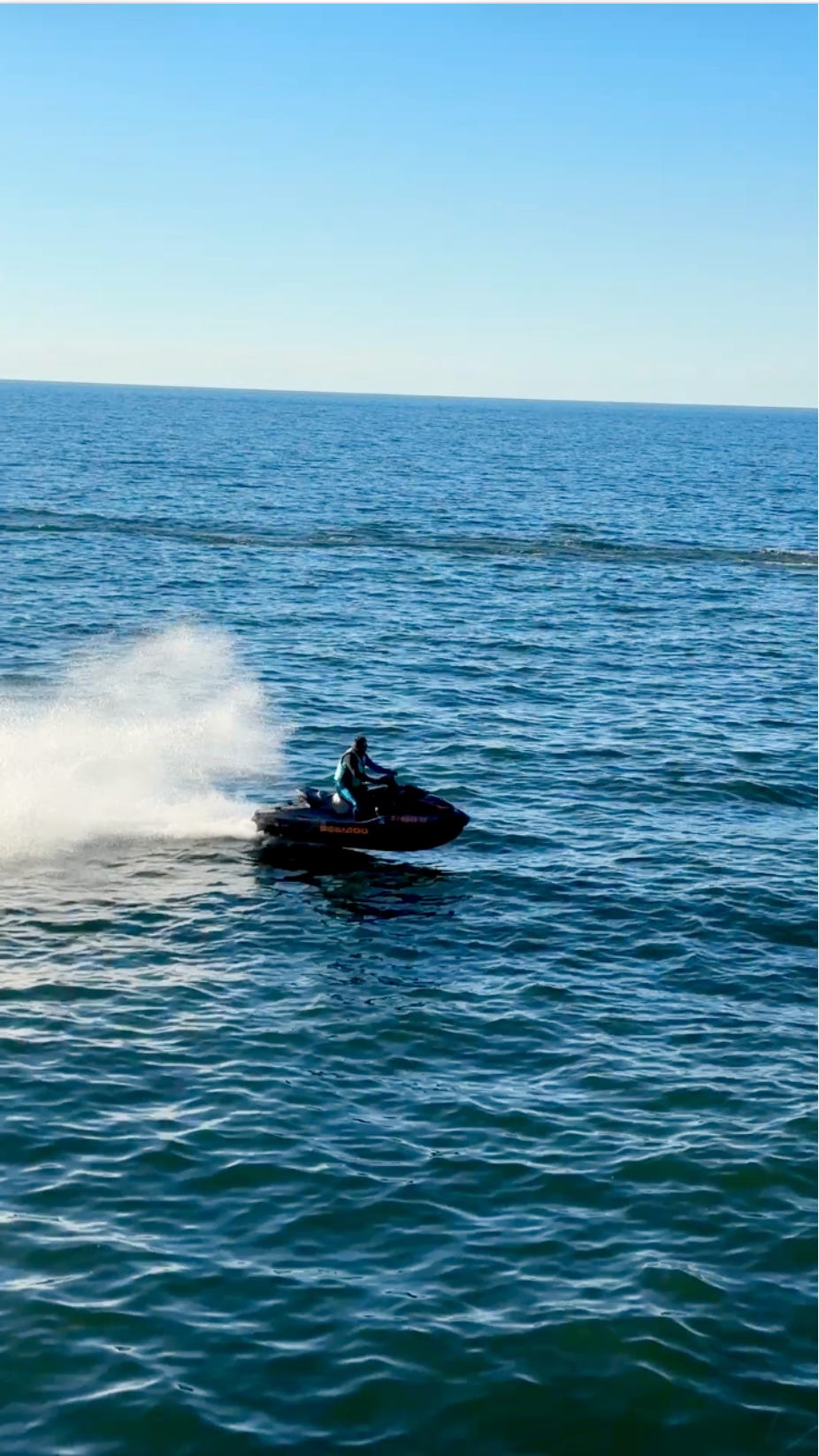
Edgewater, early October, one of those afternoons that doesn’t announce itself. We parked and watched — which is usually how I end up seeing a place properly, from a little distance, where you can take in the whole shape of it. Jet skis cutting lines across the water. Boats going out past the breakwall and coming back. People spread along the pier rail with lines in the water, the way they’d been when we arrived.
We ate. We stayed. And the thing I noticed, somewhere in the long middle of the afternoon, was that almost nobody was leaving.
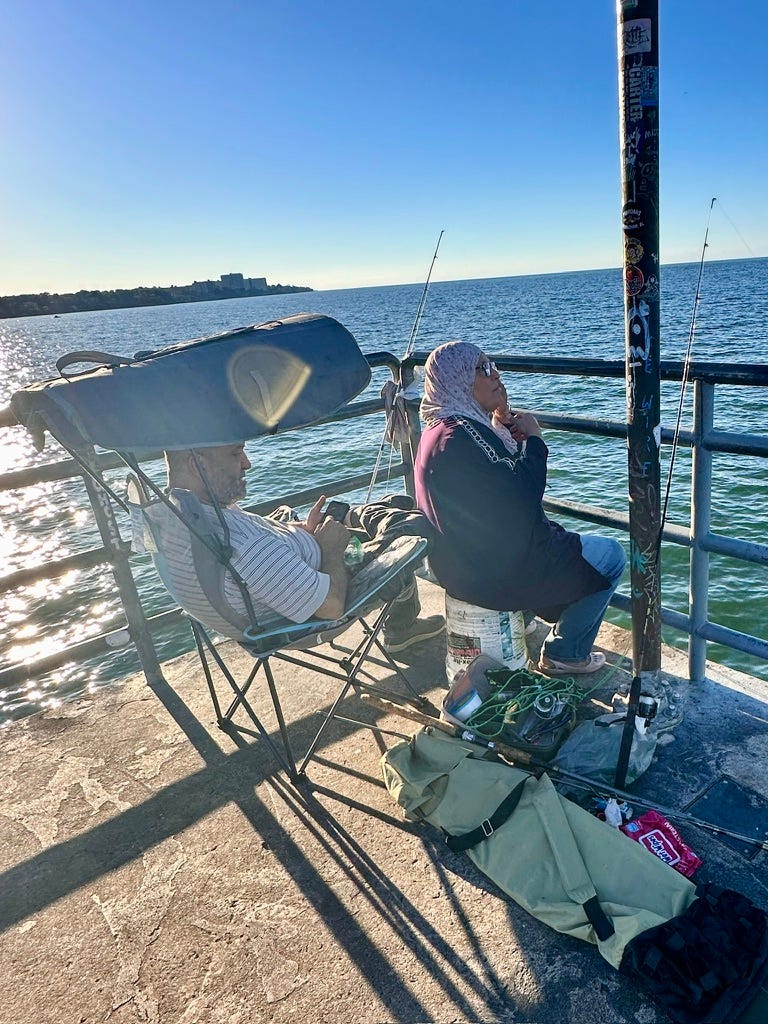
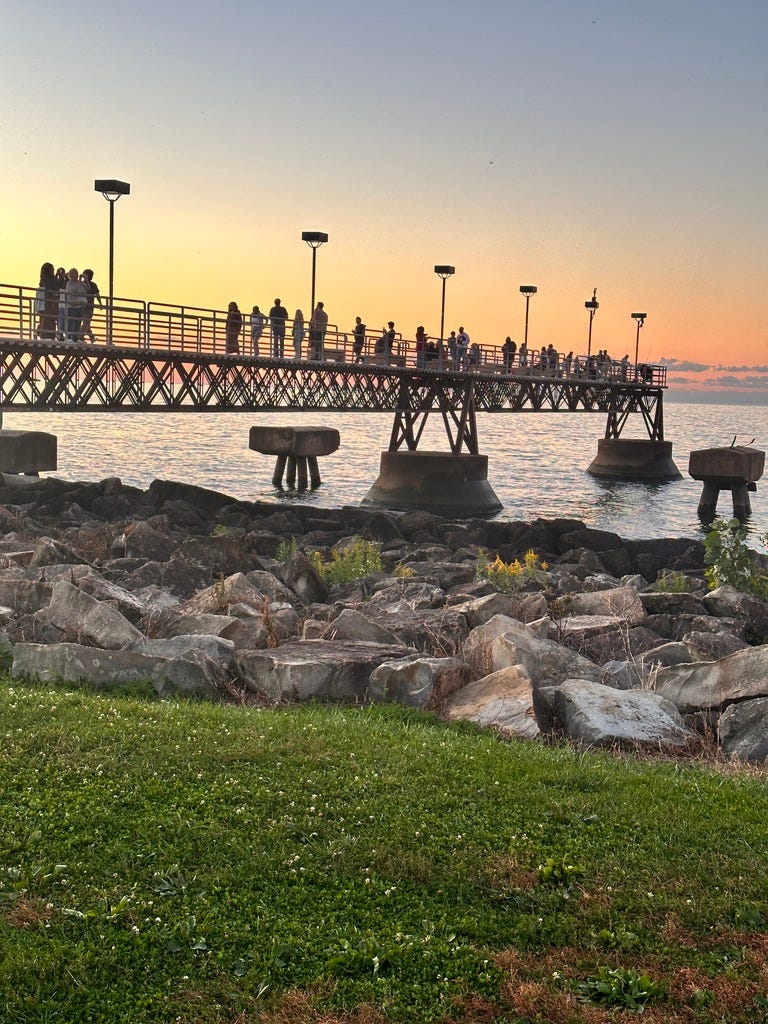
By seven the pier had filled. Forty, fifty people spread end to end along the rail — friends, couples, families with kids leaning out over the water, a few people fishing past where the walkway turns. Nobody in a hurry. Everyone waiting on the same thing.
I’ve walked waterfronts in a lot of cities this year. Most of them are beautiful. Very few of them look like that.
What makes Edgewater unusual isn’t the view, though the view is genuinely something. It’s who’s there, and how long they stay. Different neighborhoods, different incomes, different ages, occupying the same stretch of shoreline for an entire afternoon. Nobody organized it. There’s no programming, no ticket, no reservation.
Free and reachable is what gets people to show up. Having no reason to go home is what makes them stay. The second one is much harder to build than the first.
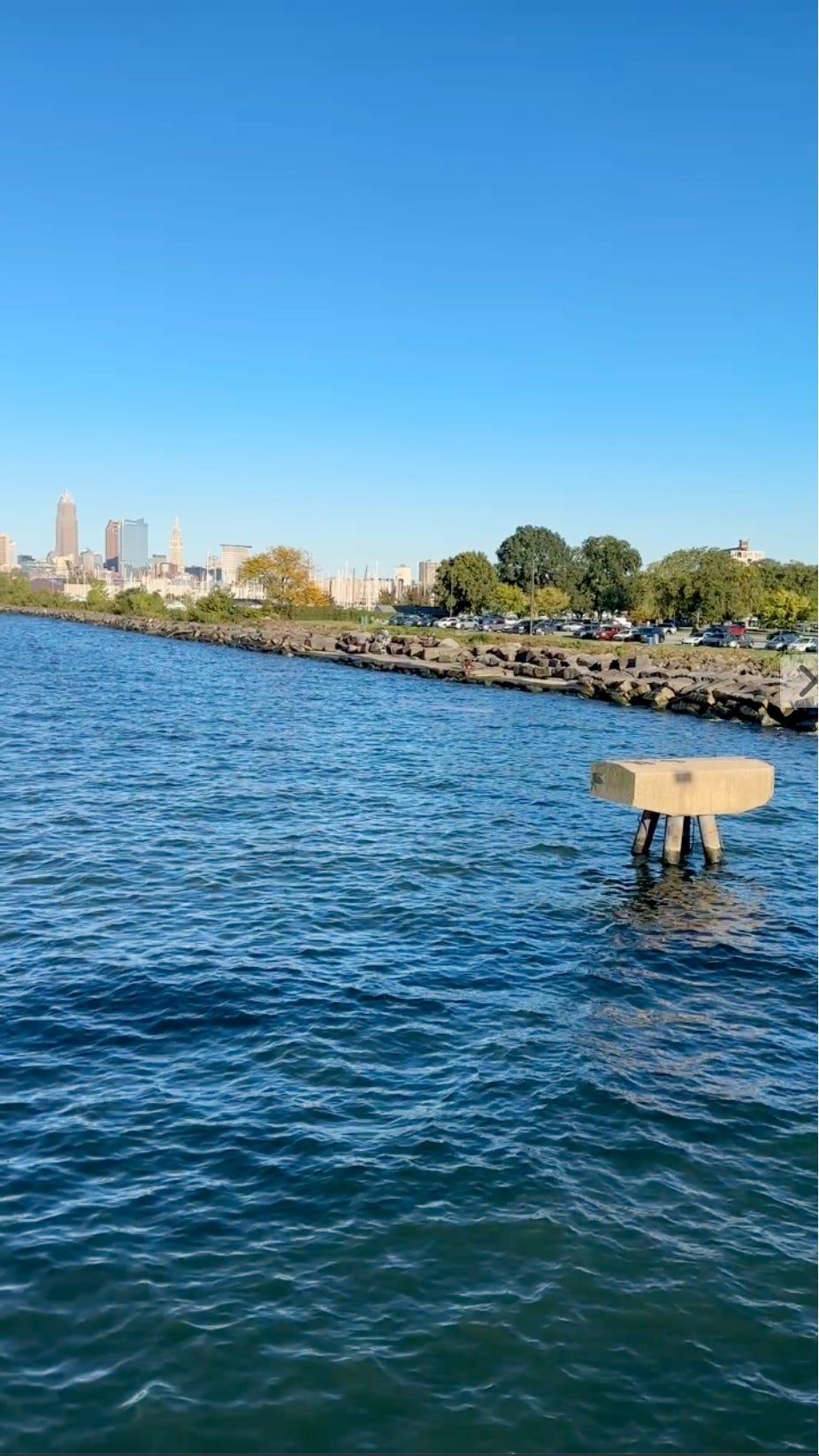
Cleveland is in the middle of the most significant waterfront moment in its modern history. Billions of dollars are moving — a landbridge connecting downtown to the harbor, a master developer taking on fifty acres where the stadium stands now, a riverfront plan that will reshape thirty-five more. For the first time in decades, this city is past renderings and into construction schedules.
I think that’s good. I’ve watched too many cities leave their best land sitting behind a highway for forty years.
But the question I keep turning over isn’t whether Cleveland should develop its shoreline. That one’s answered, and the work is underway. It’s what kind of place all that investment produces — and whether anyone will still be there at seven.
Because designed waterfronts are good at arrival and less good at staying. There’s usually a reason to leave once you’ve bought the thing you came for. The coffee runs out. The seating is for customers. There’s nowhere to put down a cooler, and nothing to do that doesn’t cost something. None of it is hostile. It’s just legible, and people read it correctly and go home early.
Three things I keep coming back to:
Access decides who shows up; comfort decides who stays
The most valuable waterfront isn’t always the most developed one
A place everyone uses is an asset that compounds, and it’s very difficult to recreate once it’s gone
Edgewater already is what a lot of this is trying to become. That seems worth noticing while the plans are still being drawn.
What does the shared space in your city say about who it’s for?
— Eve
Sunday Reflections — observations on money, place, work and life.
Eve Moss is the founder of Clarendon, a commercial real estate firm working in housing markets nationwide. clarendon.com