


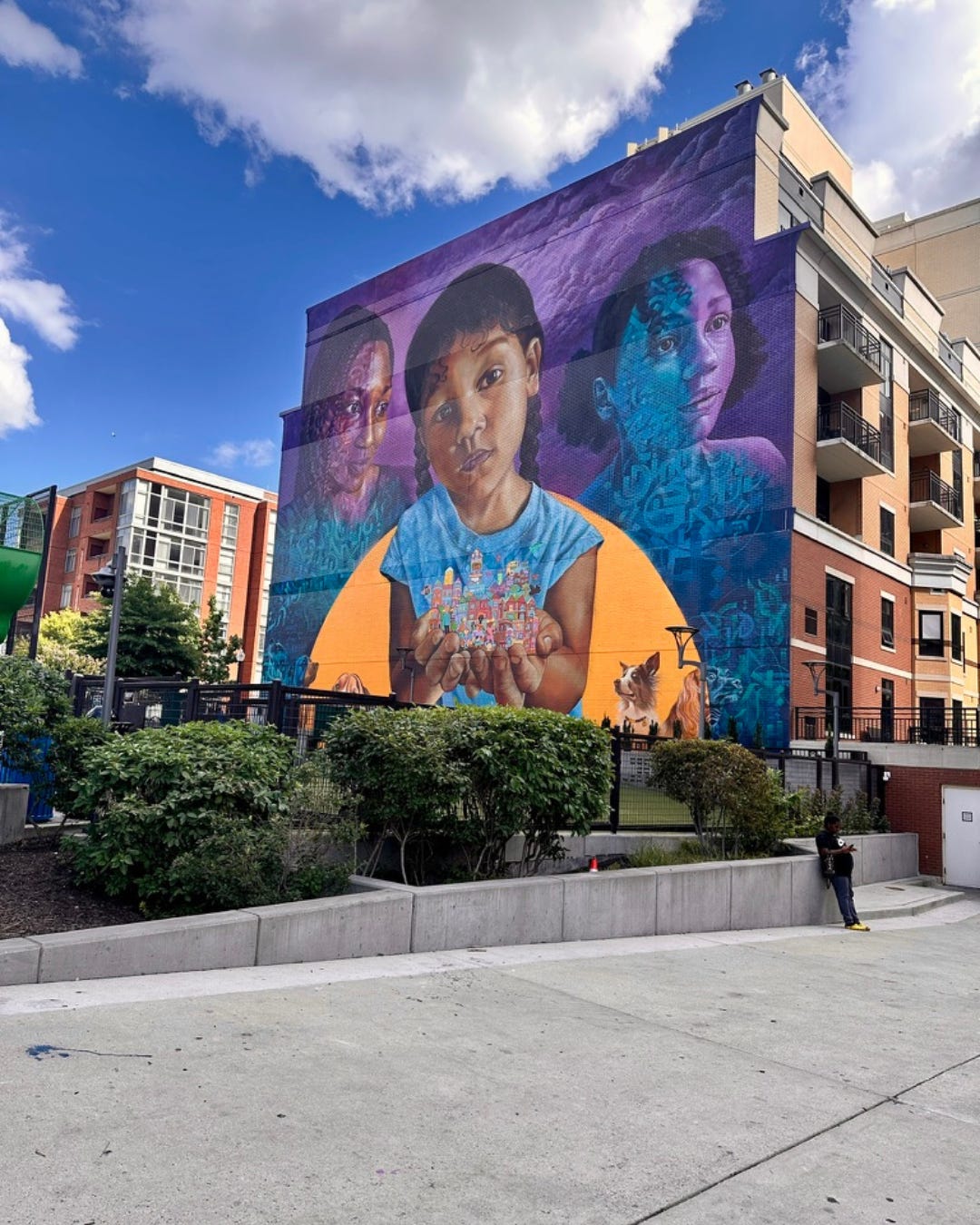
On the side of a building next to Swampoodle Park, in the Washington neighborhood now called NoMa, there is a mural. A girl stands in the center, a figure on either side of her, and she holds a whole city cupped in her hands: small painted rowhouses, tiny figures, a place small enough to carry. The artist is Joel Bergner. His own wife and two daughters modeled for it. The city in the girl’s hands was not painted by him. It was painted by 3rd graders from the school down the block, and collaged onto the wall. So the neighborhood’s own children painted the neighborhood she is holding. The wall says this place belongs to them.
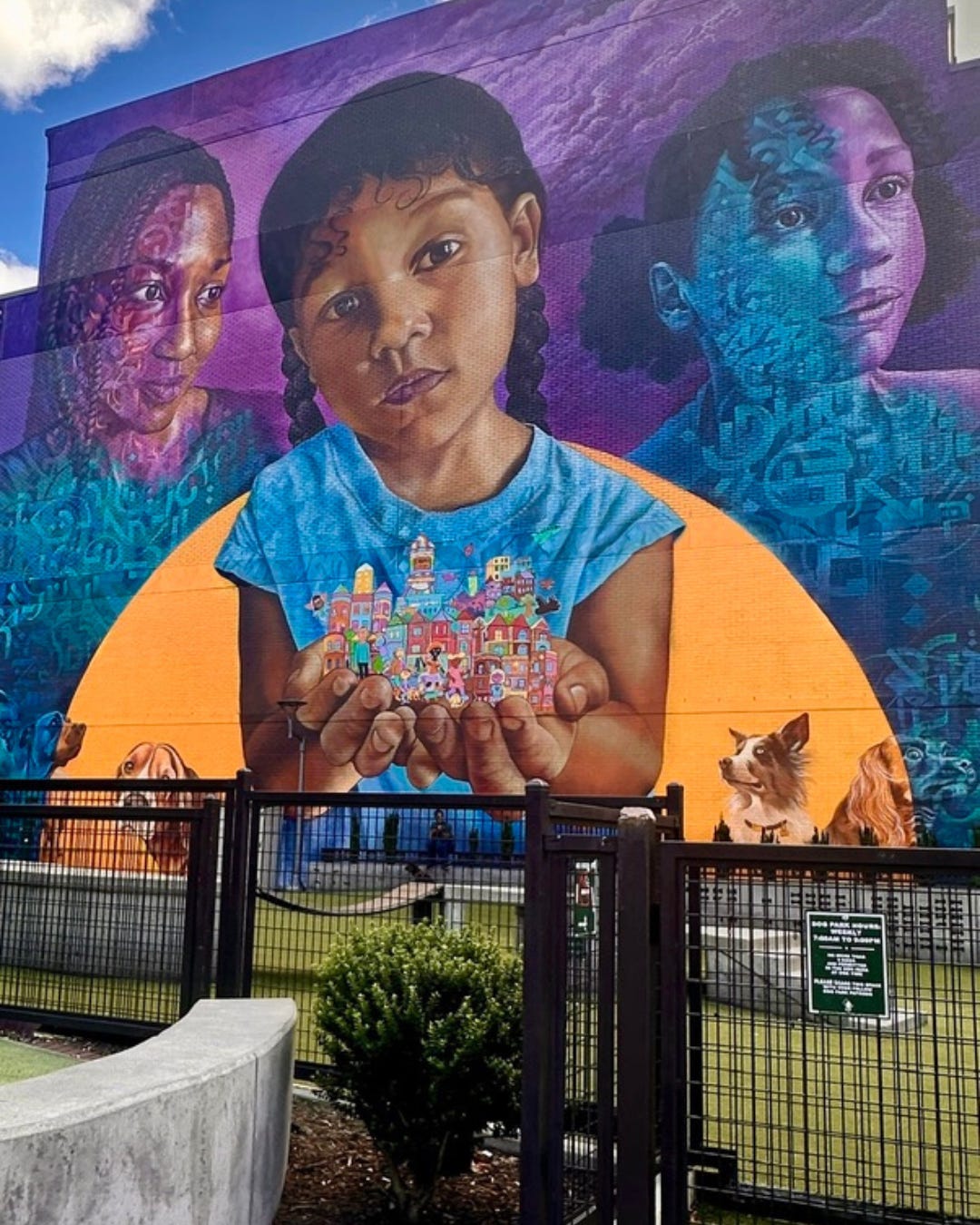
The neighborhood is called NoMa. It stands for North of Massachusetts Avenue, and it was coined in the 2000s, the way SoHo and NoHo were coined, to give a name to land that people did not yet want. Before NoMa, this was rail yards and warehouses behind Union Station. The name came first, then the towers, then the dog parks, then the rents.
Here is what I keep turning over, as someone paid to know what moves a property’s value. A name is the fastest instrument there is. You can rename a district before you touch a single building, and the comps come loose from the old set and reattach to the new one. NoMa is that move made official. A name that made a neighborhood for the market, top down, deed first.
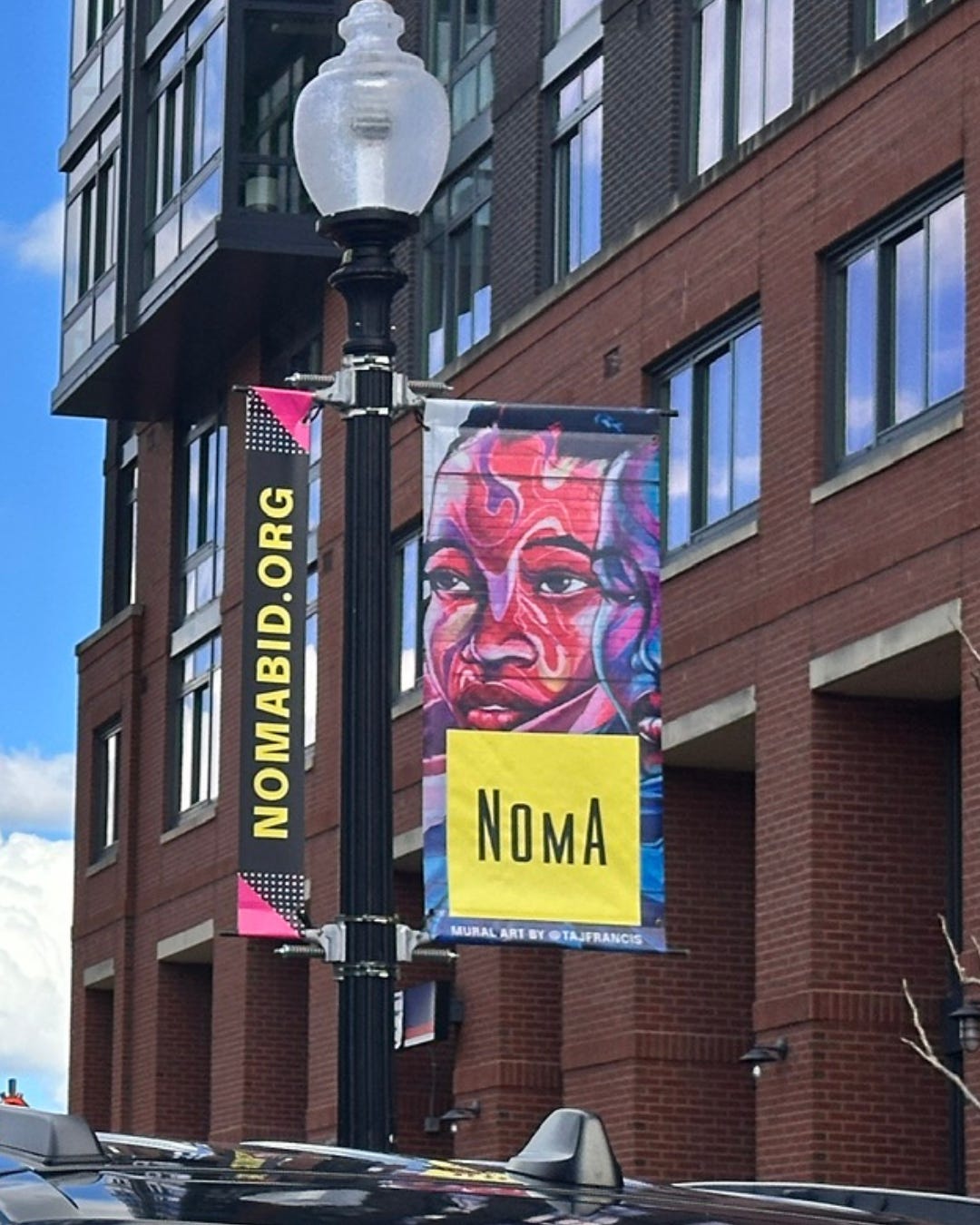
Now look at the lamppost. The banner carries the name, NoMa, and next to it a mural. That mural is a reproduction. The original was painted by an artist named Taj Francis, on a wall that has since been redeveloped. The business improvement district reproduced the lost mural as street furniture. So the painting that used to be on a building is now a banner advertising the district that replaced the building. The paint got displaced. The picture of it stayed, to sell the place.
And the wall the children are painted on belongs to Union Place. It is a Toll Brothers building, and its leasing copy makes its own claim on the same block, on the same structure. It tells you that here, you know you’ve arrived. That is a promise about belonging too, on the same wall as the mural, aimed at a different person. The mural says the neighborhood belongs to the children who live here. The building says it belongs to whoever arrives. One wall, holding both.
The business improvement district commissioned the mural. It kept the picture of the demolished one. It coined the name. It lists the building in its neighborhood guide. One organization, four moves, one block. Each move raises the value of the ground. The mural is sincere and the children are real, and both things are true at once: it is a real claim, and it is part of what makes the ground worth more.
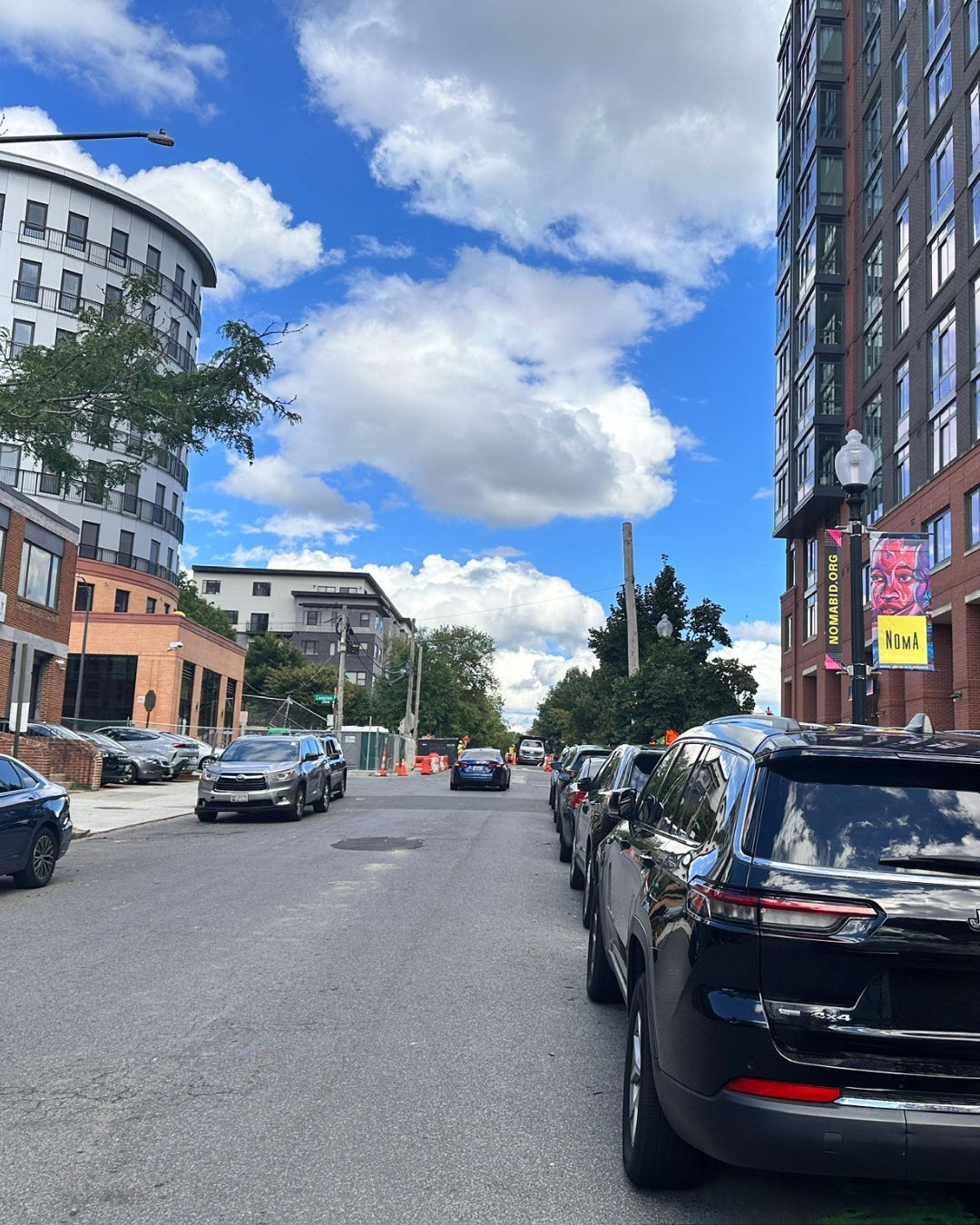
In Harlem, a community renamed its own street to stay. Here, the naming ran the other way, and the community’s children were painted onto the front of it. The girl holds the city carefully. Someone else holds the deed.
One of this month’s names: what a neighborhood is called, and who got to decide. The others, and the essay that ties them together, follow through the month.
— Eve Moss
Map & Parcel. Field Notes. August 2026.

Map & Parcel™ is a publication of Chavah Media Ltd. This essay is editorial and for general interest only; it does not constitute legal, financial, or investment advice.
© 2026 Chavah Media Ltd. | Map & Parcel™. All rights reserved.