


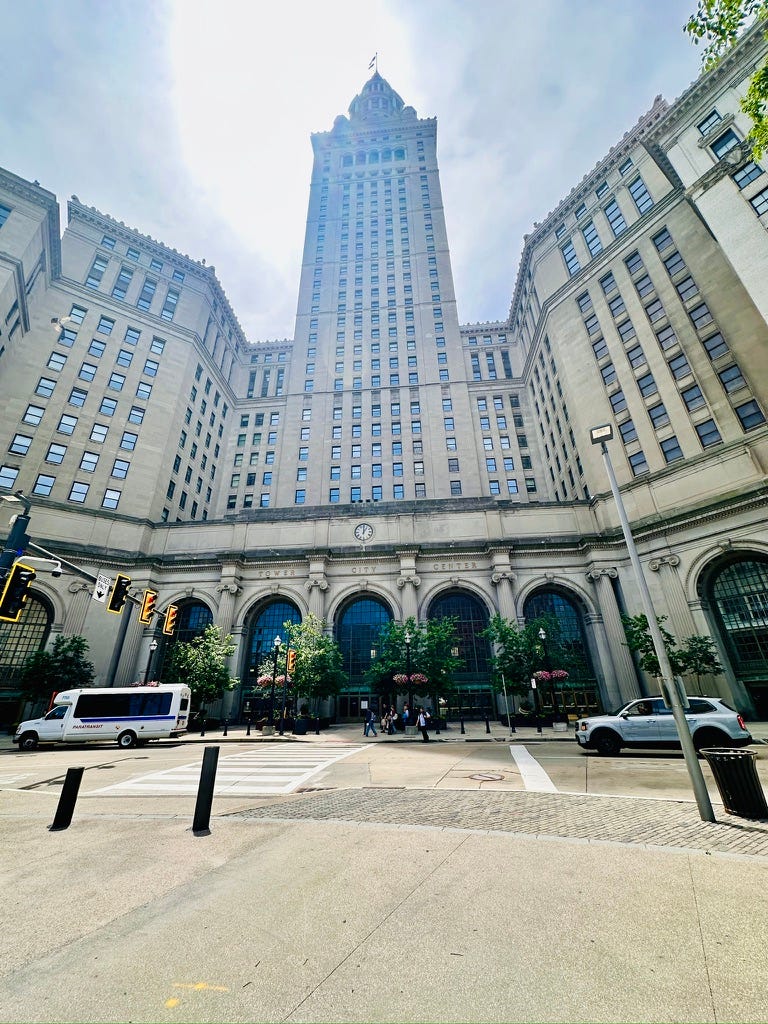
Right now, on the coasts, the office towers are emptying. The work moved into laptops during the pandemic and a lot of it never came back, and downtowns built around a daytime population that no longer commutes in are sitting half-occupied. The conversation about what to do with them — turn them into housing — is treated as a new problem with a new solution.
It is not new. Cleveland has been doing this for fifty years.
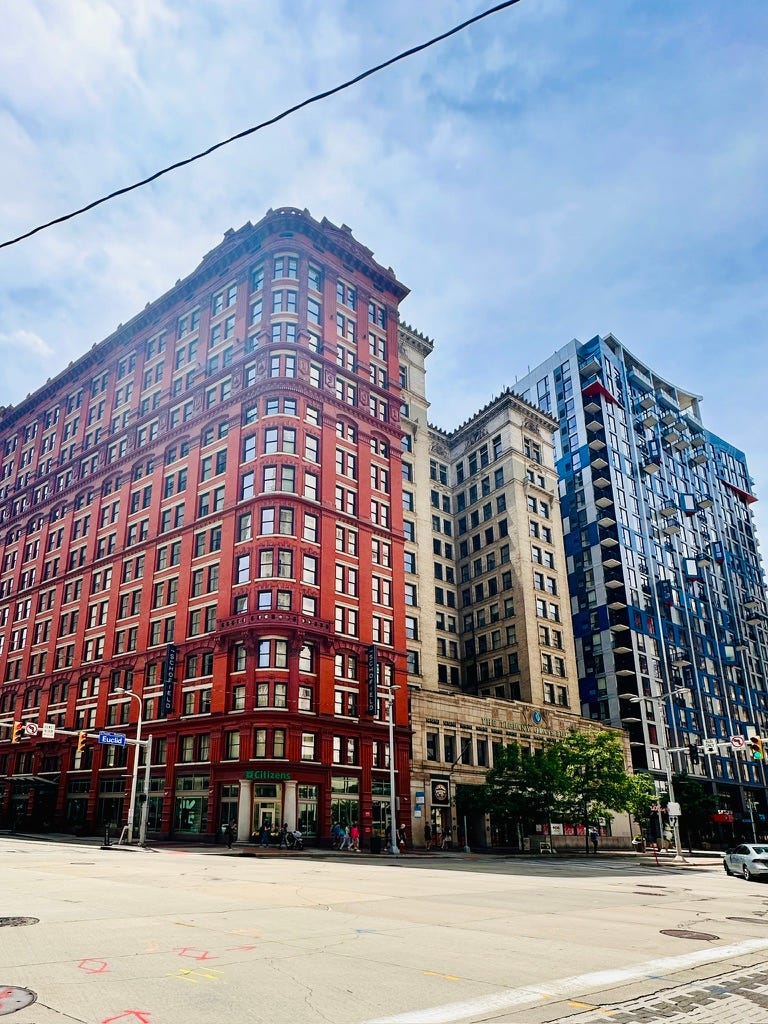
The thing the coastal version of the story misses is that an office tower doesn’t need a pandemic to empty. It needs a disruptor — any force that moves the work somewhere the building can’t follow. On the coasts in 2020, that disruptor was remote work. In the Midwest, it came earlier and slower: steel left, manufacturing left, the corporate headquarters consolidated or moved, and the downtown that had been built around all that work was left with buildings it no longer had a use for. Different cause, same result. The work leaves; the building empties.
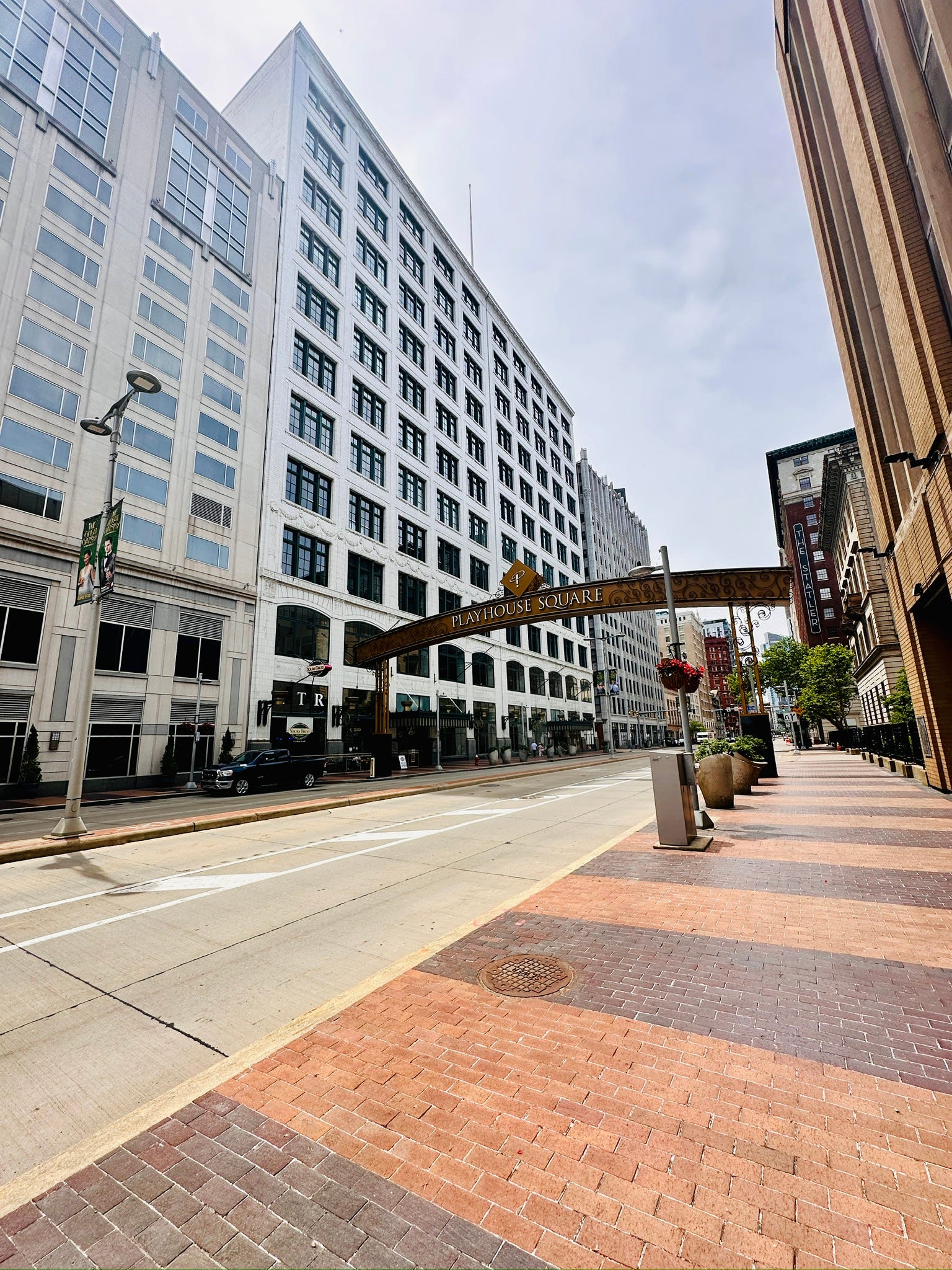
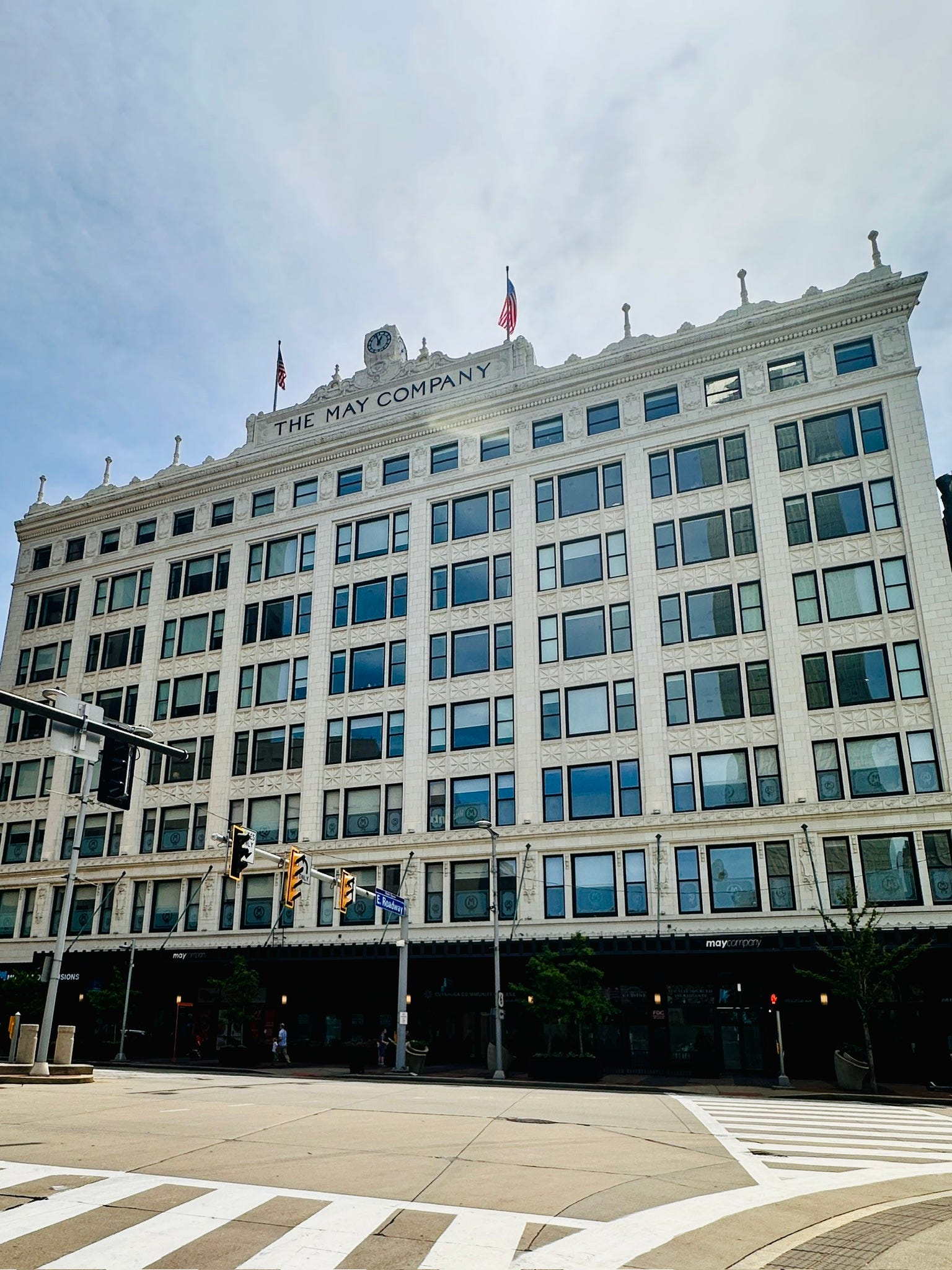
So Cleveland learned to convert. Not as post-pandemic strategy — out of necessity, decades ago, because the buildings were already empty and demolition was the only other option. The old Halle Brothers department store became apartments on its upper floors. The May Building on Euclid Avenue, three hundred-plus units. Terminal Tower, the city’s 1926 landmark, converted in 2019. Banking halls became restaurants; office floors became one-bedrooms. By the time the rest of the country discovered “adaptive reuse,” Cleveland had run the cycle so many times it had the contractors, the architects, and the regulators who simply knew how to do it.
That is the whole point. The disruptor changes — deindustrialization, then a financial crisis, then a pandemic, and whatever comes next. The cycle underneath does not. A use becomes obsolete, the building empties, it sits, and eventually someone finds the next use and converts it. The coasts are experiencing this as a crisis because it’s their first time. The Rust Belt has seen it before, and knows how it ends.
The work leaves. The building waits. Someone turns it into housing.
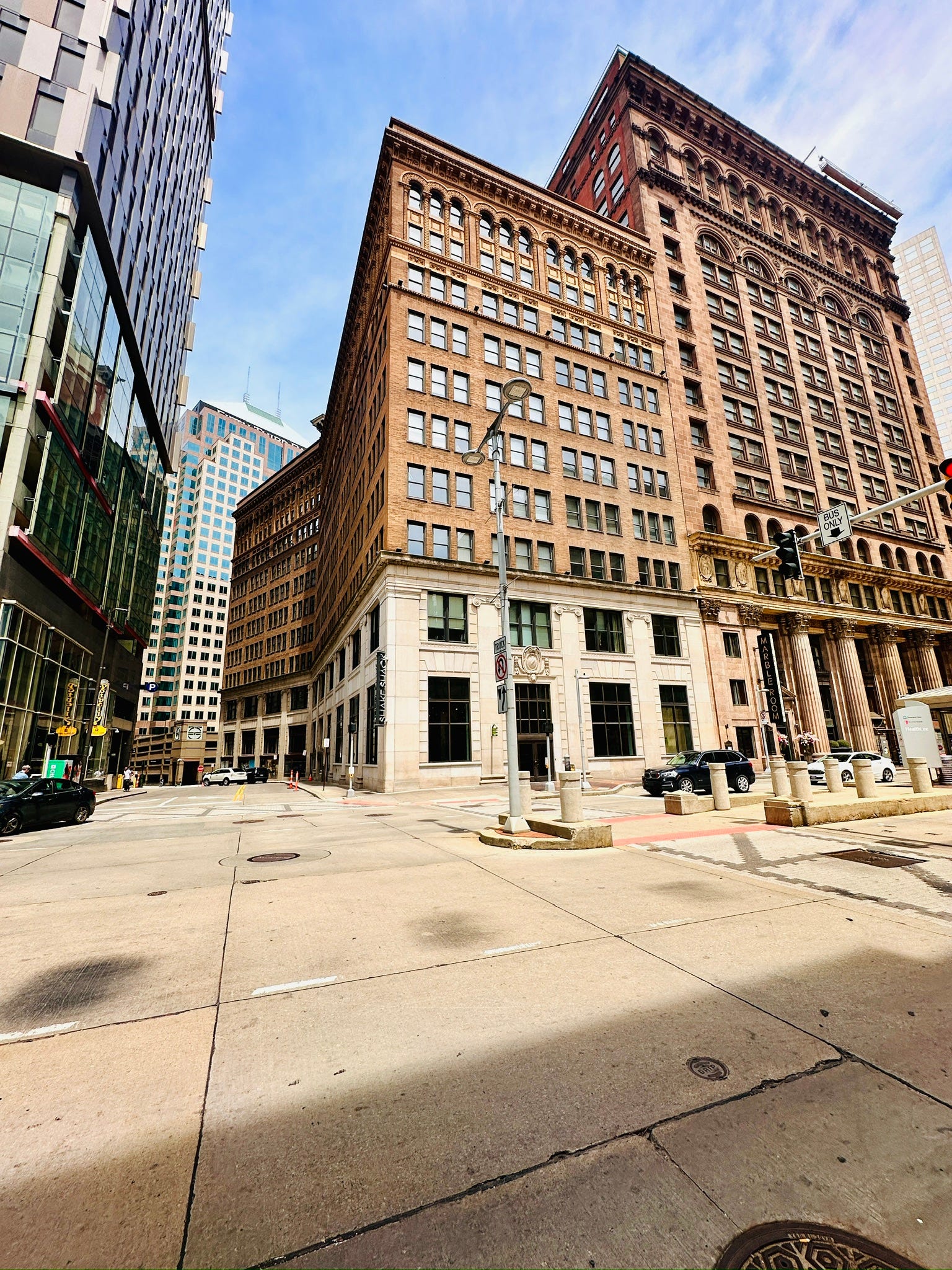
One of this month’s conversions — what empties a building, and what fills it. The others, and the essay that ties them together, follow through the month.
— Eve Moss
Map & Parcel. Field Notes. June 2026.
The Name Is Still Carved Over the Door

Across the country, converting closed schools to apartments was the fastest-growing kind of conversion last year — emptied not by failure, but by the children who left.
The Same Building Keeps Converting

A cotton mill, a loft block, a leather warehouse, a research lab — different cities, one arc.
Map & Parcel™ is a publication of Chavah Media Ltd. This essay is editorial and for general interest only; it does not constitute legal, financial, or investment advice.
© 2026 Chavah Media Ltd. | Map & Parcel™. All rights reserved.