


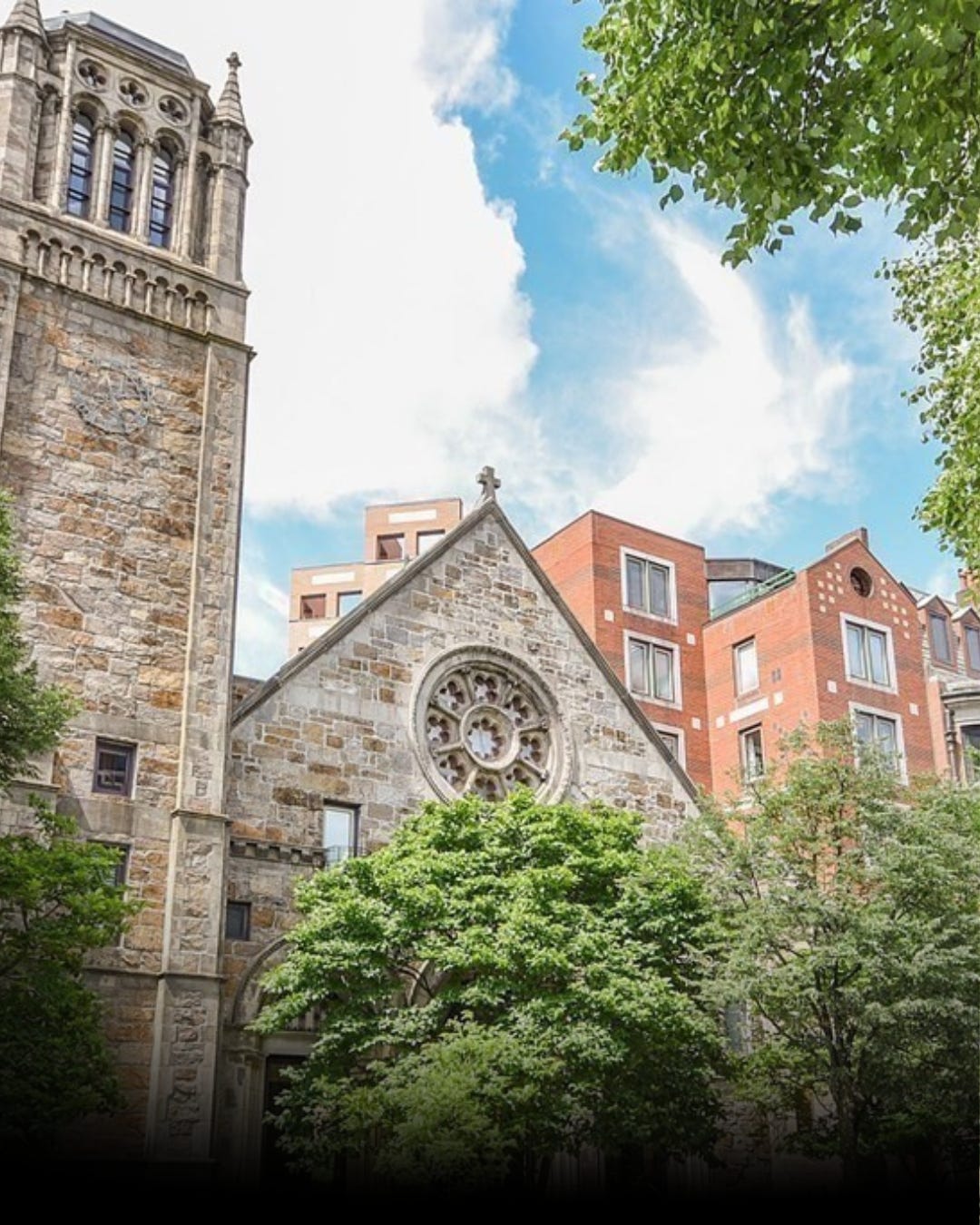
A church built to hold hundreds on a Sunday. It holds a handful now. And once you start looking, you find the same slow story in neighborhood after neighborhood: the congregation grew old, and the young families who might have replaced them moved to where the housing was cheaper — or, in the neighborhoods that gentrified around the church, were priced out of the blocks their grandparents had lived on.
This is the slowest conversion in this series. A factory goes obsolete in a decade when the technology moves; an office empties in a season when the work goes remote. A congregation thins the slowest way there is — a funeral at a time, a family moved away at a time — until one Sunday there aren’t enough people in the pews, or enough in the plate, to keep the roof repaired and the doors open. The building doesn’t fail. The community that built it ages out from under it.
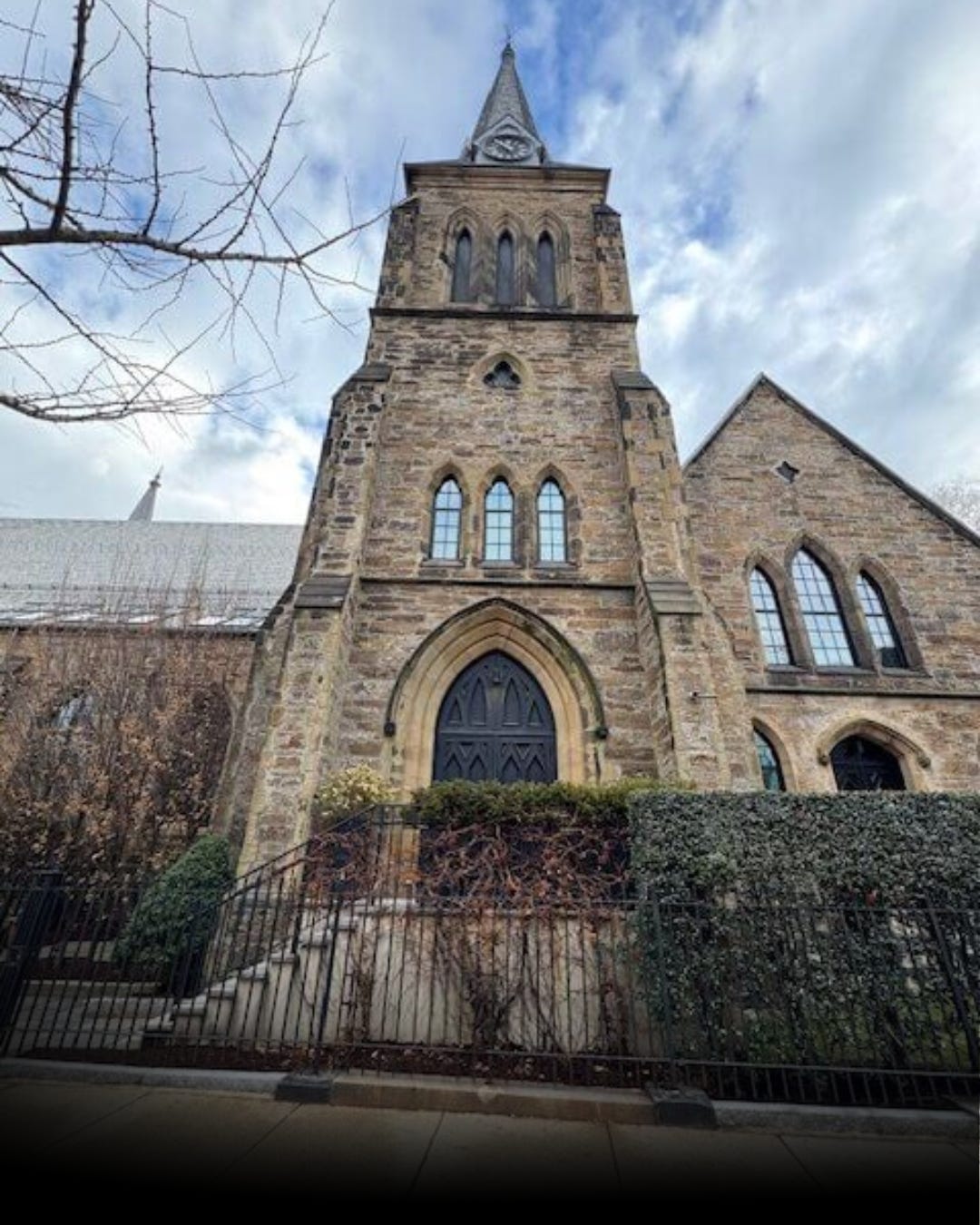
There is a newer wrinkle on top of the old story, and it’s worth being precise about, because it’s easy to get wrong. Churches have broadcast for as long as there’s been broadcasting — the radio preachers, then the television ministries. That never emptied the local sanctuary, because it was a supplement: a service for the shut-in, the sick, the member who couldn’t make it in, piped from a few national pulpits to everyone else. What’s different now is that the stream is a substitute, not a supplement, and it runs from every pulpit at once. Your own small church livestreams; so does the larger, better-produced one across town, and its service is there on demand, any hour, no car required. A member who once would have driven in now watches — keeps the faith, maybe keeps giving, but not to the building down the street. The screen doesn’t kill the religion. It decouples the believer from the real estate. And a congregation can be perfectly alive online while the specific sanctuary it used to fill goes quiet enough to sell.
But the screen is the accelerant, not the cause. The cause is older and simpler: the people who filled that room grew old, and fewer came behind them.
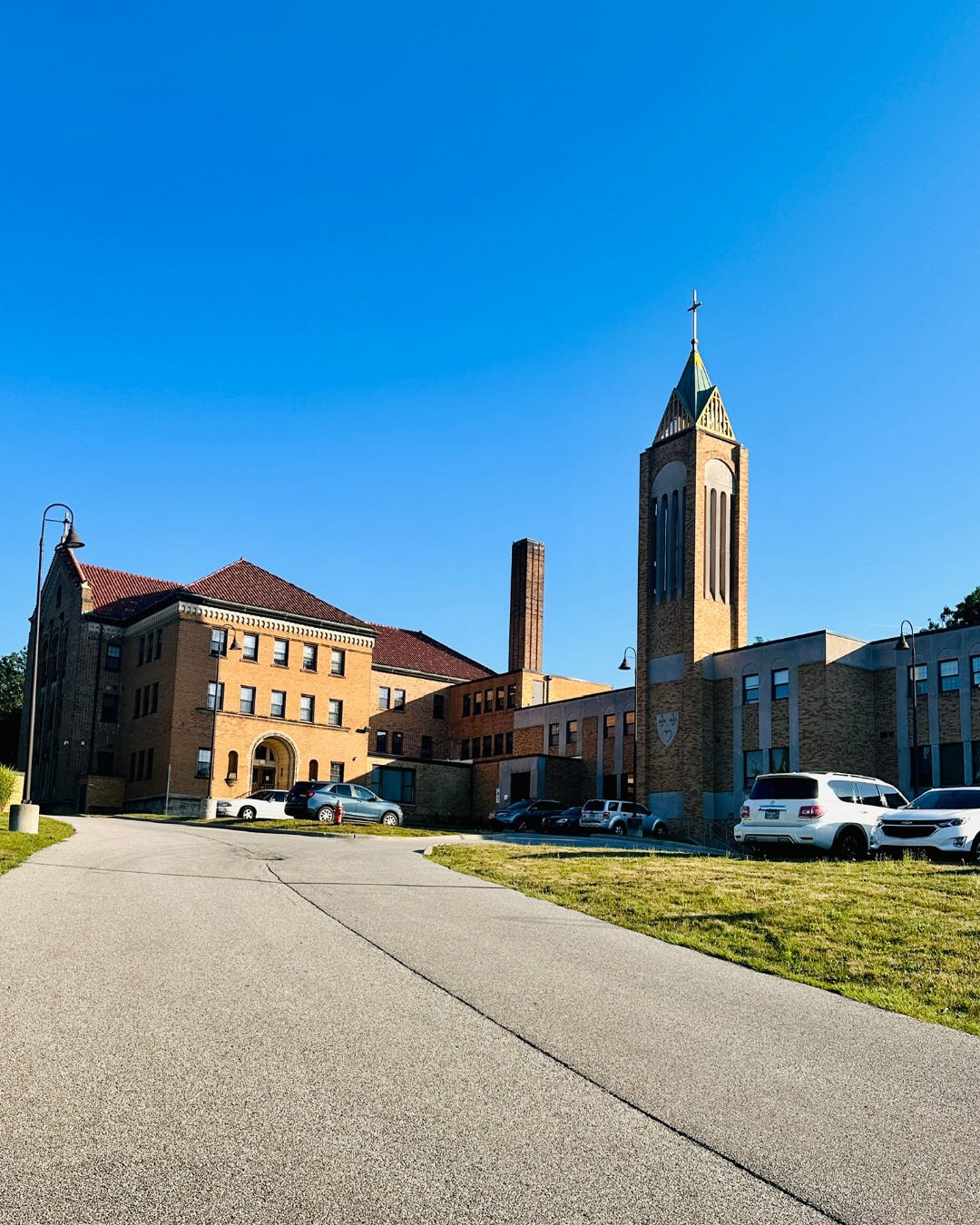
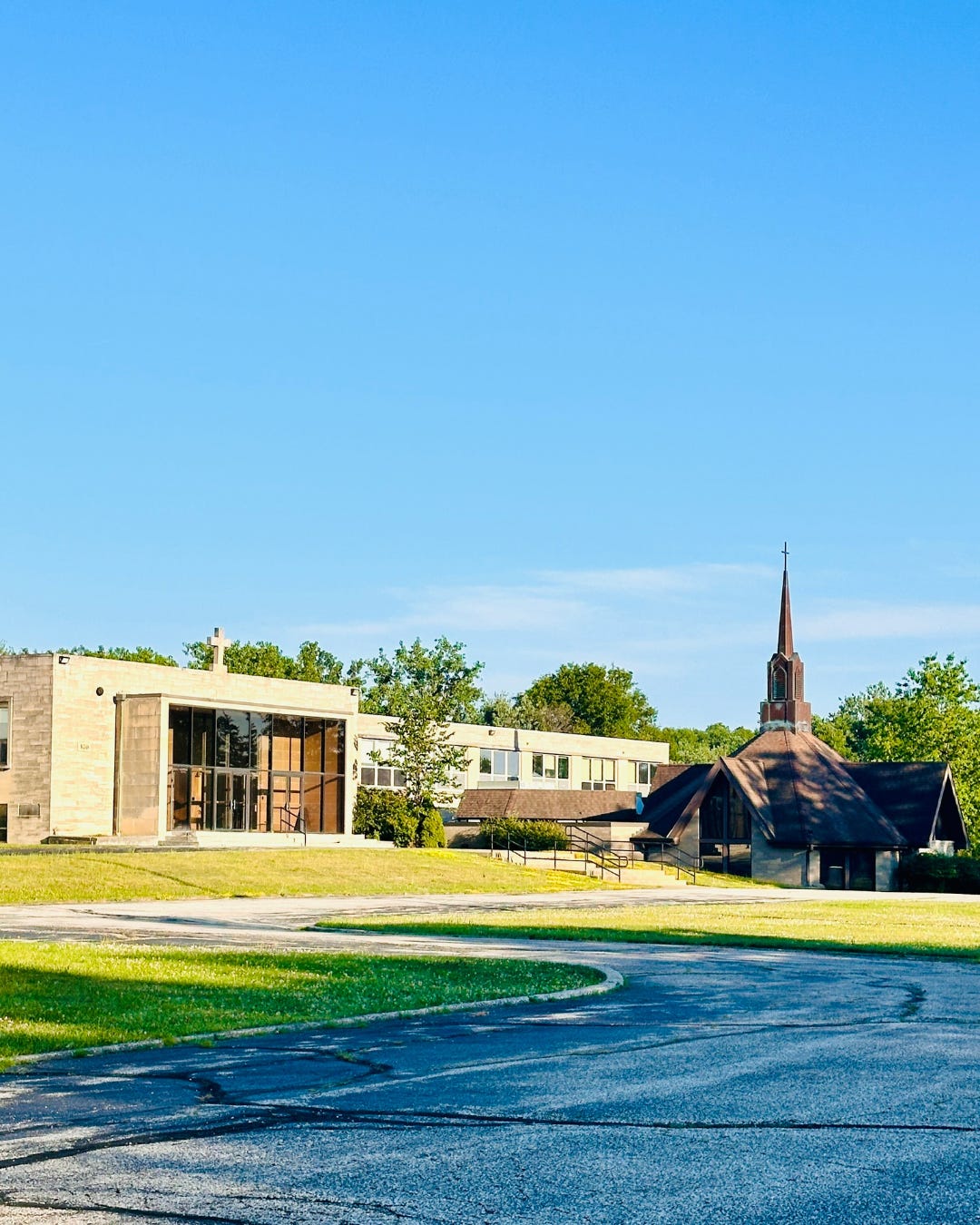
A church sits outside the market while a congregation holds it. It pays no property tax. It isn’t for sale. It has no highest-and-best-use because it has no price at all — it is held in trust, not in commerce. That changes the instant it is sold. It enters the tax roll and acquires, for the first time, a most-profitable use, and in any neighborhood under pressure that use is residential. Condos, usually. The developers keep the stained glass and the steeple, because the stained glass and the steeple sell the units. The thing that made it a sanctuary becomes the thing that markets the apartments.
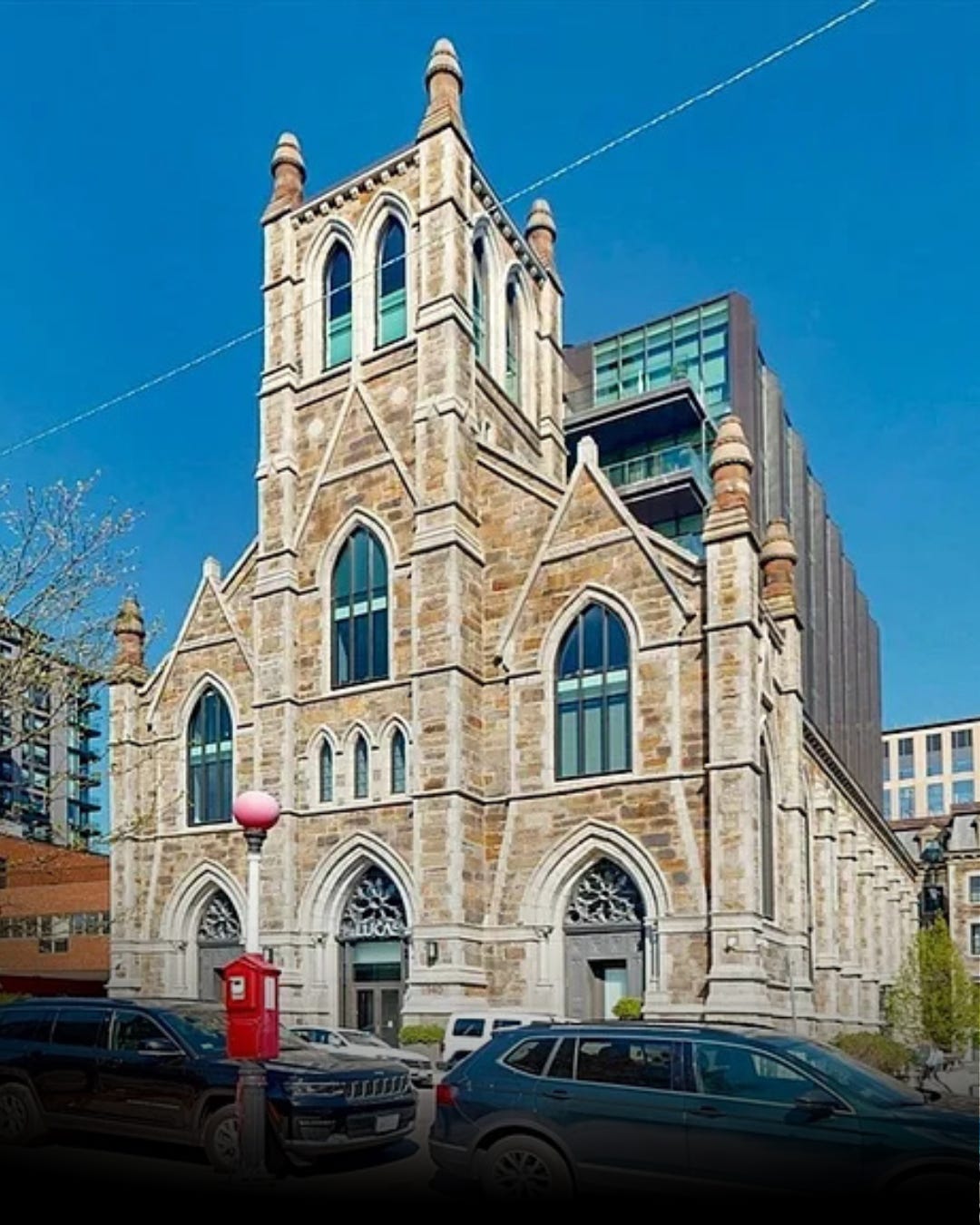
And this is where the church says more than the factory or the office ever could. A closed factory tells you an industry left. A converted church tells you a community did — or was moved. In many neighborhoods the church was the last thing the original community still owned after the housing had already turned over: the last institutional anchor, the last deed that still said who the place had been for. When it converts, the last public claim converts with it. The steeple still stands over the block. It just no longer means what it meant.
The steeple still says whose neighborhood this was. The deed says whose it is now.
One of this month’s conversions — the last of them. The essay that ties them all together follows.
— Eve Moss
Map & Parcel. Field Notes. July 2026.
The Name Is Still Carved Over the Door

Across the country, converting closed schools to apartments was the fastest-growing kind of conversion last year — emptied not by failure, but by the children who left.
Downtown Cleveland, Ohio

The coasts think office-to-housing conversion is new. Cleveland has done it for fifty years.
The Same Building Keeps Converting

A cotton mill, a loft block, a leather warehouse, a research lab — different cities, one
Map & Parcel™ is a publication of Chavah Media Ltd. This essay is editorial and for general interest only; it does not constitute legal, financial, or investment advice.
© 2026 Chavah Media Ltd. | Map & Parcel™. All rights reserved.