


There are two phrases from my profession I want to put down at the start, because the whole month runs on them.
The first is functional obsolescence. It describes a building whose original design no longer serves any productive use — not because the building is worn out, but because the world moved and the building couldn’t. A factory built for assembly lines that no longer exist. An office built for a way of working that has changed. The building is sound. Its purpose is obsolete. Those are different things, and an appraiser is trained to tell them apart.
The second is highest and best use: of all the legally permitted things you could do with a property, the one that produces the most value. Not the current use. Not the best use for the people there. The most profitable lawful use — the one the market will eventually push the building toward whether anyone intends it or not.
Put those two ideas together and you have the engine of a conversion. A use goes obsolete. The building empties. It sits — sometimes for years — while its old highest-and-best-use is gone and its new one hasn’t arrived. And then the neighborhood turns, a new most-profitable use appears, and the building converts to meet it.
That sequence is not a story about loss. It is a story about a cycle. And once you can see the cycle, you can read a neighborhood the way I have learned to read one: by looking at what its buildings are being used for, what they’re sitting empty waiting for, and what they’re turning into.
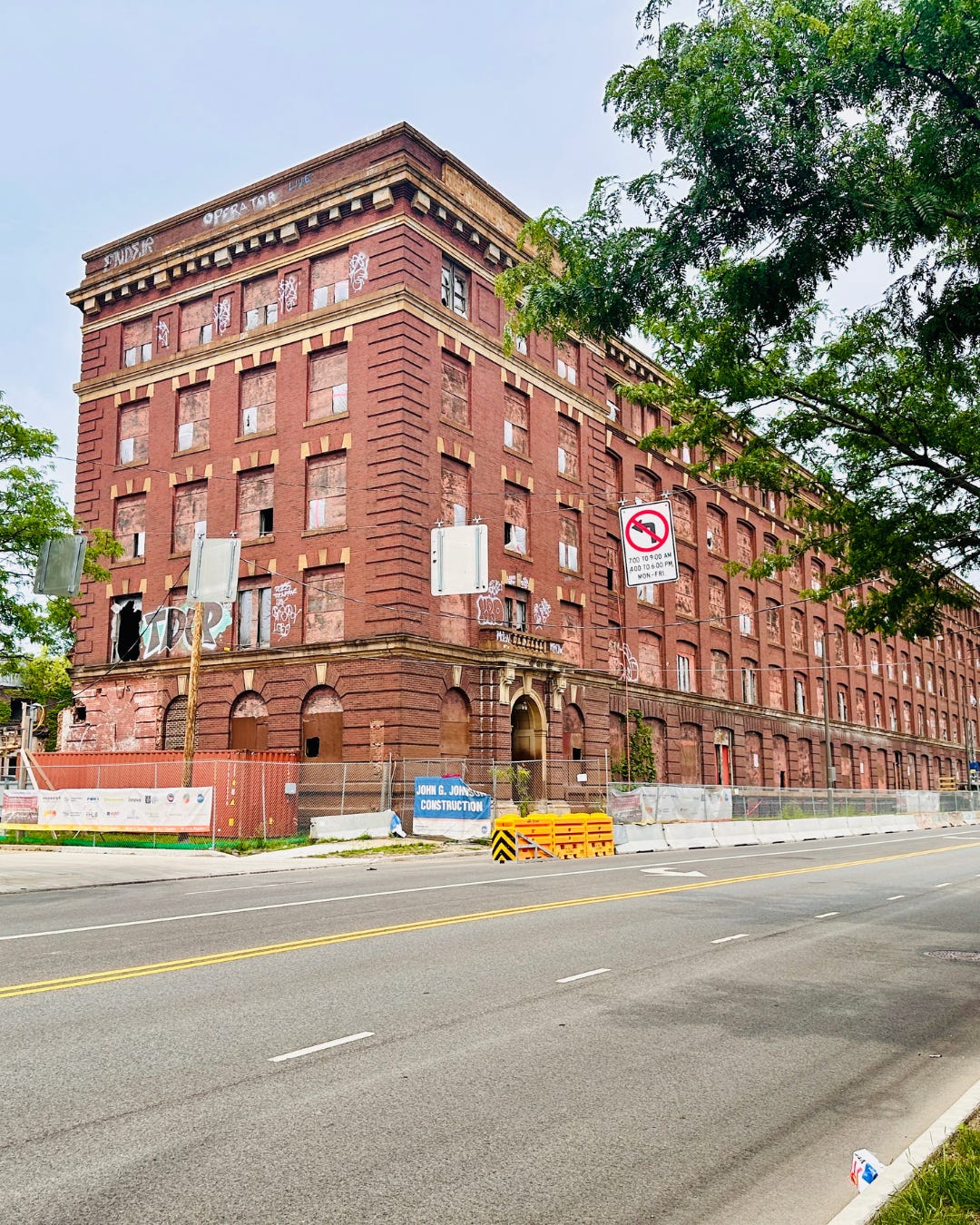
This month I photographed four conversions. A factory, a church, a school, and an office tower. They emptied for different reasons and on different timelines. But they are all doing the same thing: recording, in brick, exactly where their neighborhood sits in its cycle.
Start with the factory, because it ran the cycle first and slowest.
The urban factory went obsolete over the second half of the twentieth century, and the cause was technology. Not one technology — a stack of them. Containerized shipping made it cheaper to manufacture far away and move the goods. Automation cut the labor a building needed. Cheaper labor abroad finished the job. None of that had anything to do with the neighborhood the factory sat in. The demand for that kind of building, in that kind of place, simply moved — the way demand moves when the technology under it changes.
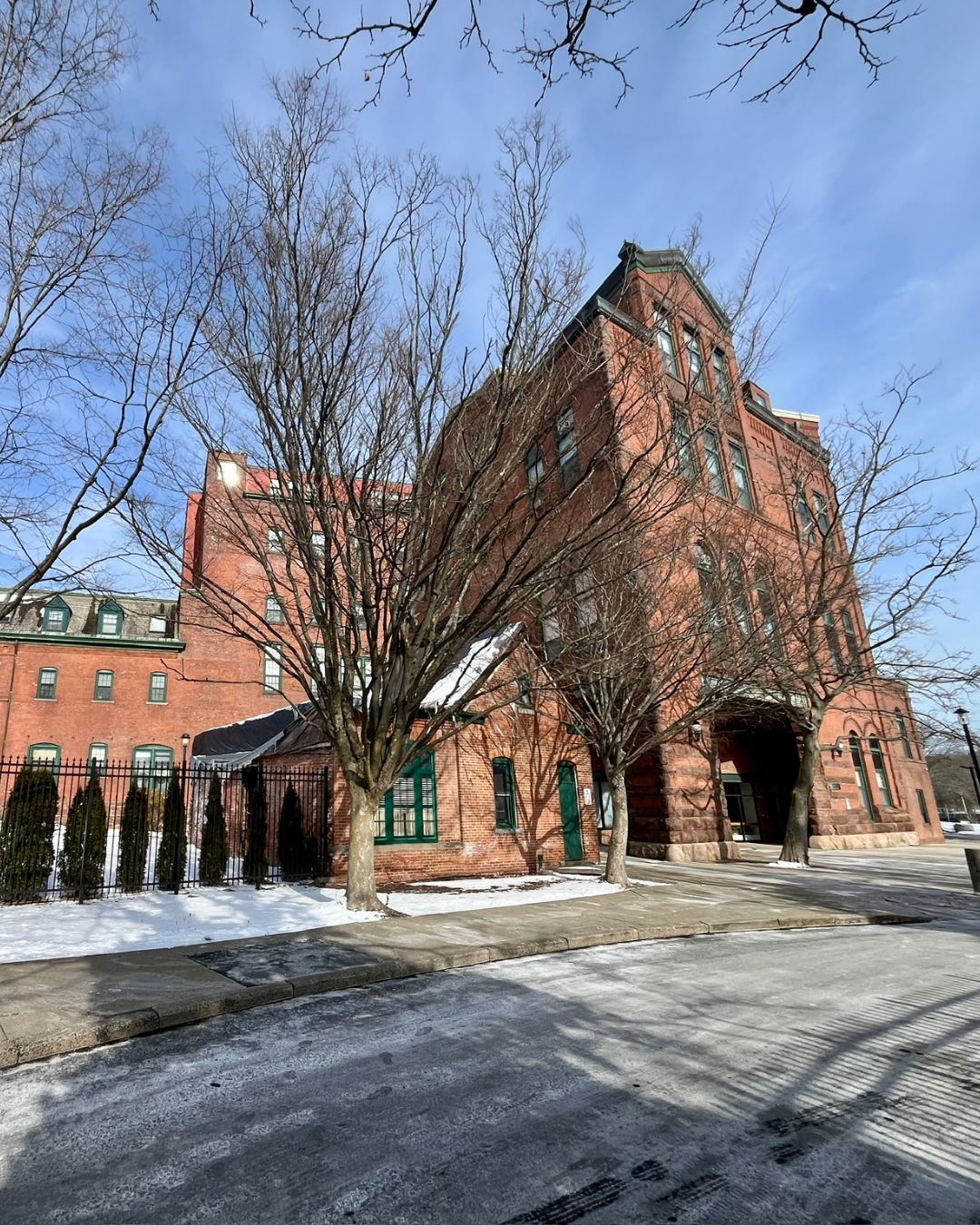
So the factory emptied. And here is the part the conversion story usually skips: it then sat. Often for a decade or more. Too obsolete to use as a factory, too solid and too large to demolish economically, in a neighborhood that had no better use for it yet. That vacancy is not failure. It is the holding phase of the cycle — the interval between the old highest-and-best-use, which is gone, and the new one, which hasn’t shown up. A neighborhood full of buildings in that phase is a neighborhood in a trough.
The conversion came when the trough ended. When artists, then developers, then capital found the cheap solid space and the neighborhood began to turn, the factory’s highest-and-best-use changed from “nothing” to “lofts,” and it converted. The freight elevator became a feature. The cycle had completed: obsolescence, vacancy, turn, conversion.
That is the template. The other three buildings are variations on it — different drivers, different speeds.
The church is the slowest variation, and the one whose driver is easiest to get wrong.
The easy answer is the screen — that worship moved to a livestream the way work moved to a laptop. There’s something to it, but it’s the accelerant, not the cause, and it’s worth being precise, because churches have broadcast for as long as there’s been broadcasting. The radio preachers, then the television ministries, never emptied the local sanctuary, because they were a supplement — piped from a few national pulpits to the shut-in and the sick. What’s different now is that the stream is a substitute, running from every pulpit at once, on demand, no car required; a member who once drove in now watches, keeps the faith, maybe keeps giving, but not to the building down the street. The screen doesn’t end the religion. It decouples the believer from the real estate.
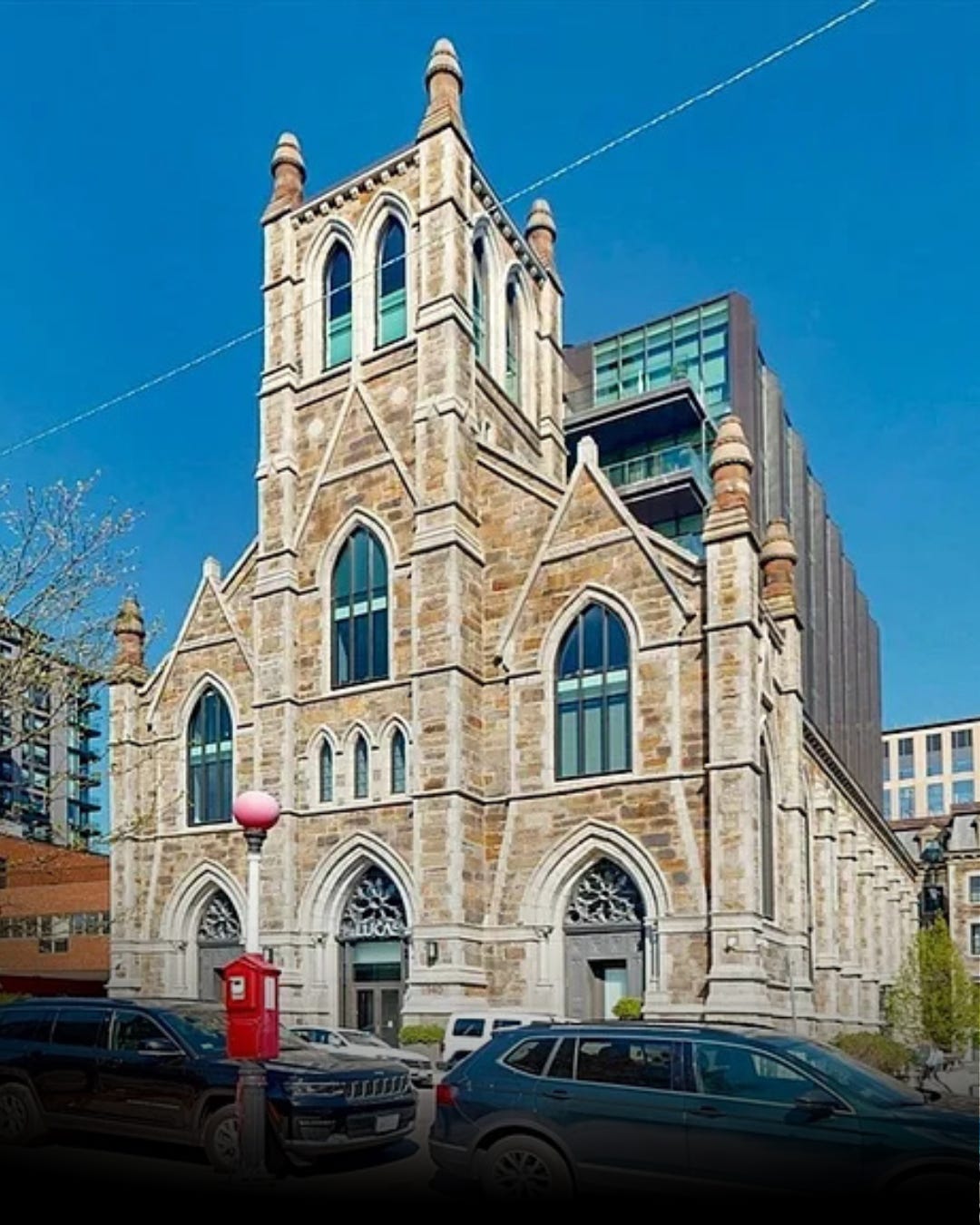
But underneath the screen is the older, slower engine: the congregation aged. A church empties the slowest way there is — a funeral at a time, a family moved away at a time — until one Sunday there aren’t enough people in the pews, or in the plate, to keep the roof repaired. The young families who might have replaced them moved to where the housing was cheaper, or, in the neighborhoods that gentrified around the church, were priced out of the blocks their grandparents lived on. The building doesn’t fail. The community that built it ages out from under it.
A church carries no price while a congregation holds it. It pays no tax, it isn’t for sale, it has no highest-and-best-use because it sits outside the market entirely — held in trust, not in commerce. That changes the moment it’s sold. It enters the tax roll and acquires, for the first time, a most-profitable use — usually residential, in any neighborhood under pressure. The stained glass stays because it sells the units.
And this is where the church says more than the factory or the office can. A closed factory tells you an industry left. A converted church tells you a community did — or was moved. In many neighborhoods the church was the last thing the original community still owned after the housing had already turned over: the last institutional anchor, the last deed that still said who the place had been for. When it converts, the last public claim converts with it. Same cycle as the factory underneath — obsolescence, vacancy, turn, conversion — but what goes obsolete here isn’t a technology. It’s a community’s hold on the ground. The steeple still stands over the block. It just no longer means what it meant.
The school breaks the pattern a second way — and pairs with the church as the other conversion driven by people rather than technology, though the two point in opposite directions.
The factory and the office emptied because the technology of their use moved somewhere else. The church emptied because a community aged out from under its building. The school emptied because the children did — and that is not the same thing as the church. Birth rates fell. Families with children were priced out toward where the houses are cheaper. The neighborhood did not empty — in many cases it was gaining wealth at exactly the moment it was losing children — it simply stopped producing the one input a school requires, and enrollment dropped below the line that keeps the doors open.
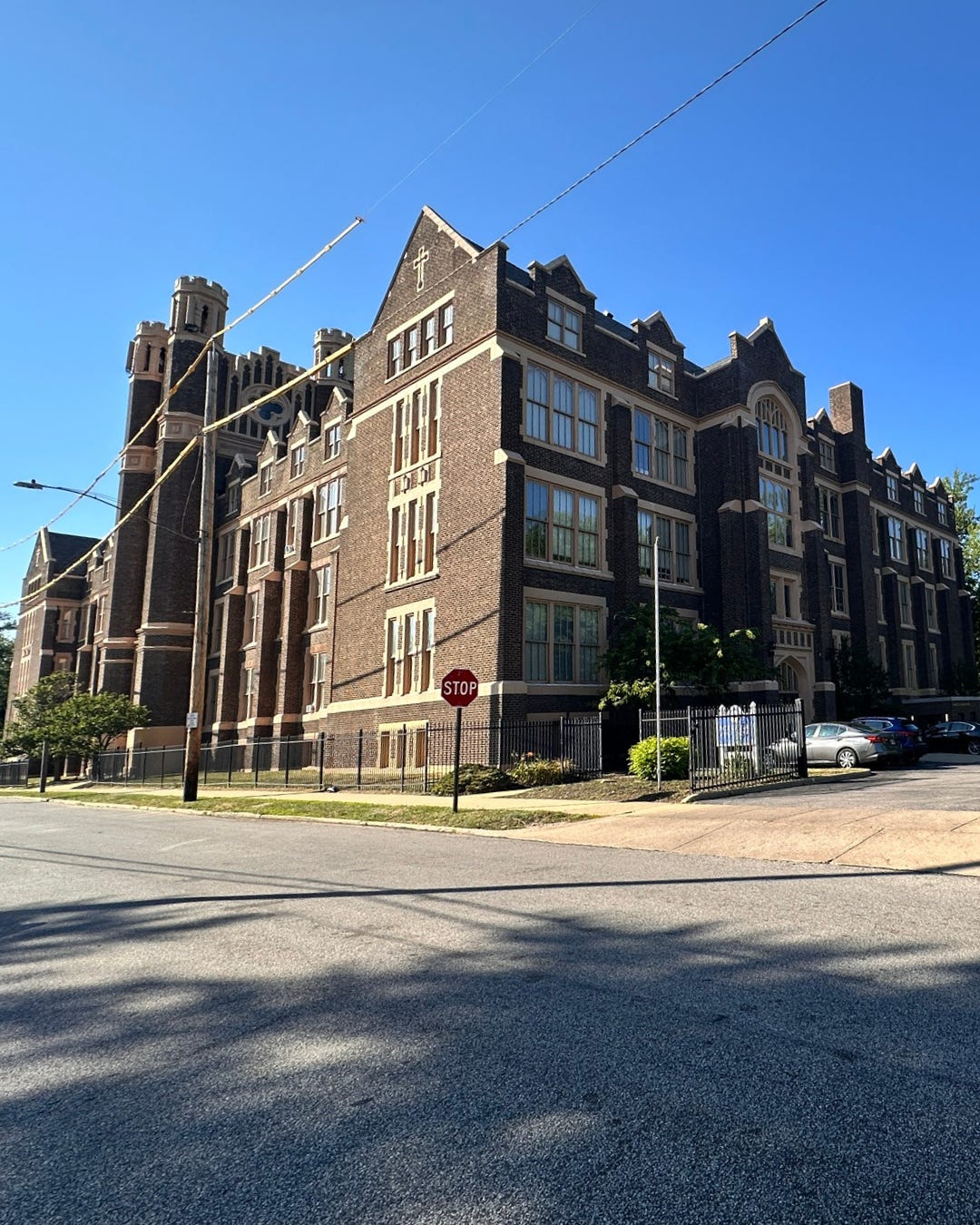
That is why the school matters to the chapter. It proves the cycle has more than one engine. A neighborhood losing its factories is losing its old economy. A neighborhood losing its schools is often gaining one — wealthier, older, childless households moving in. Same conversion on the surface, opposite signals underneath, and you can only tell them apart if you read the driver. The lintel still says school. The deed says otherwise. Reading the deed without reading the driver tells you a building changed hands. Reading the driver tells you which direction the neighborhood is moving.
The office tower is the cycle you can watch turning right now.
The desks did not move overseas. The work moved into laptops. Video conferencing, cloud software, and a year of forced practice made the commute optional, and after Covid enough of it stayed optional that the arithmetic of a downtown tower broke. A building at half occupancy, in a district built around a daytime population that no longer arrives, is functionally obsolete for the same reason the factory was: the technology of its use changed and the demand for that kind of space, in that kind of place, moved.
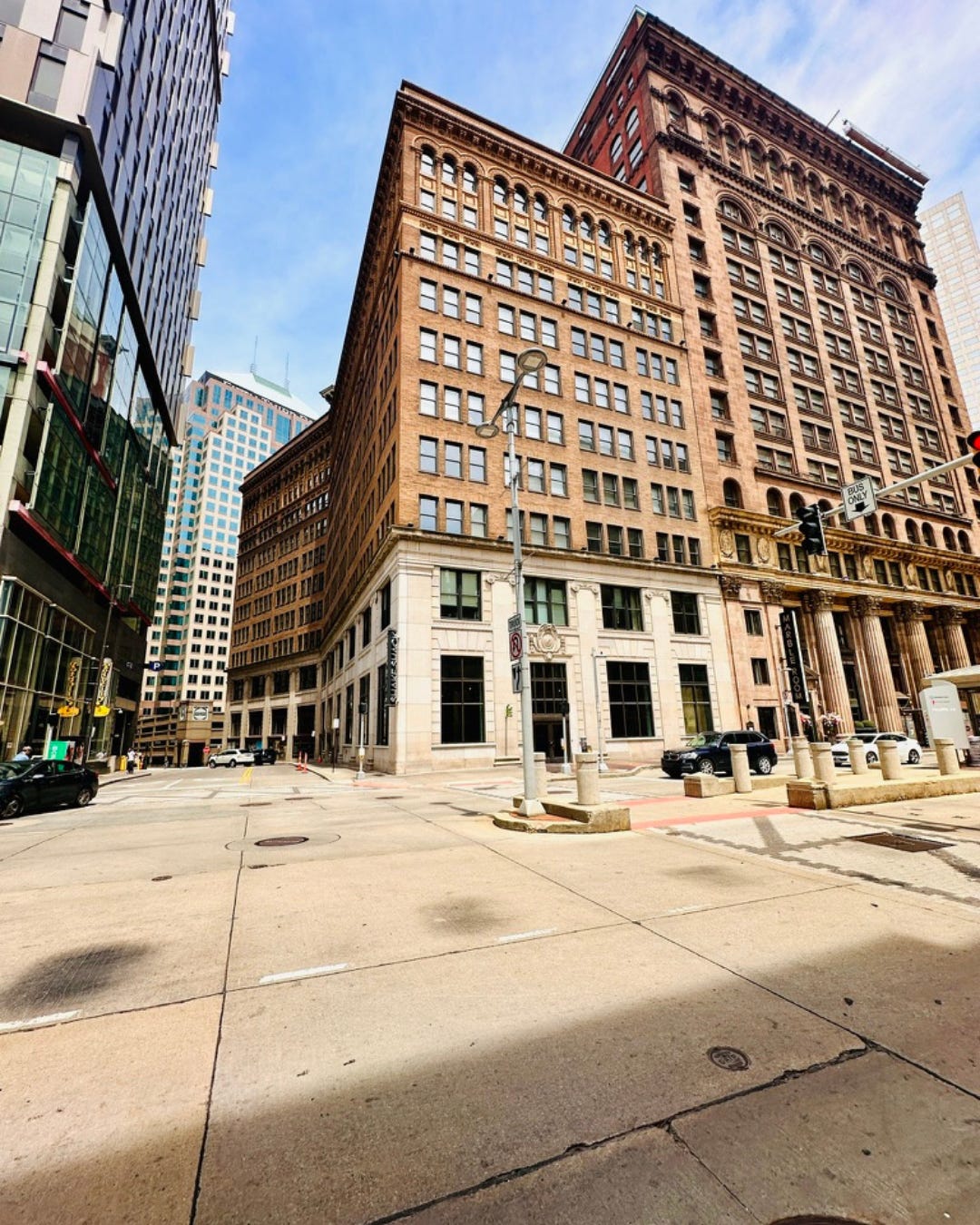
So the towers are emptying, and in 2026 they are converting — offices into apartments, with some cities now paying developers to make the math work. It is the factory’s cycle run again, only compressed. The factories took fifty years to move from obsolescence to conversion. The office towers are doing it in five. You can stand downtown and watch a neighborhood change phase in real time — which is the closest thing this work offers to seeing the cycle with the naked eye.
None of this is theft. The machines left. The congregation aged out. The children genuinely left. The office tower is obsolete for a real reason. Nothing here was stolen. Demand moved, the way it always moves, and the buildings are following it through the cycle the way buildings always do.
What I am doing is reading the dial. Every building in this chapter tells you where its neighborhood is in the cycle. The empty ones tell you the most — they’re the ones caught mid-turn, between what they were for and what they’re about to become. Learn to read the empty buildings and you can see a neighborhood’s future before its deeds record it.
That is the first thing this kind of looking teaches: neighborhoods move in cycles, and you can read the phase off the buildings. The highways, the collapses, the crises, the repricings this series will keep returning to — each is a force that drives a cycle, interrupts one, or resets one. Conversions is where we learn to see the cycle at all.
— Eve Moss
Map & Parcel. Field Notes. Conversions.

The Name Is Still Carved Over the Door

Across the country, converting closed schools to apartments was the fastest-growing kind of conversion last year — emptied not by failure, but by the children who left.
Downtown Cleveland, Ohio

The coasts think office-to-housing conversion is new. Cleveland has done it for fifty years.
The Same Building Keeps Converting

A cotton mill, a loft block, a leather warehouse, a research lab — different cities, one
Map & Parcel™ is a publication of Chavah Media Ltd. This essay is editorial and for general interest only; it does not constitute legal, financial, or investment advice.
© 2026 Chavah Media Ltd. | Map & Parcel™. All rights reserved.